
Supreme Court Narrows 90-Year-Old Limits on Presidential Removal Power
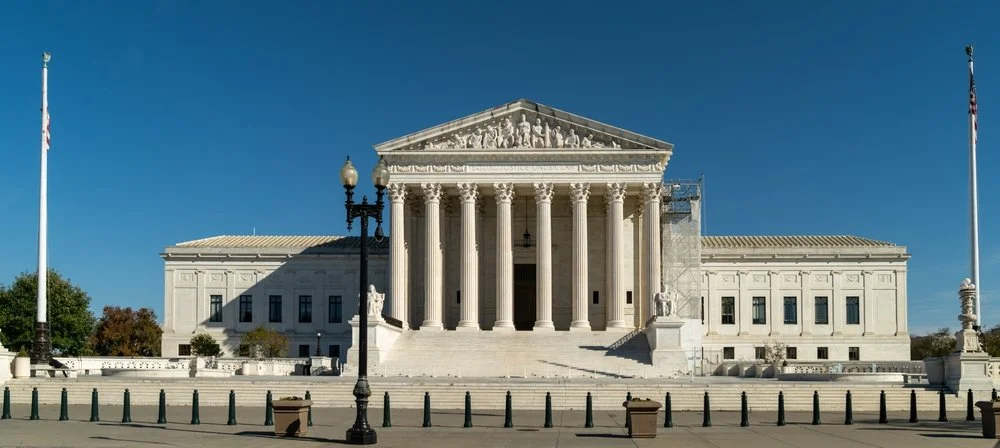
The Supreme Court sharply curtailed a 90-year-old precedent, significantly expanding the president's authority to remove members of certain independent federal agencies.
In a 6-3 decision in Trump v. Slaughter, the court ruled that President Trump had the authority to fire Federal Trade Commission (FTC) Commissioners Rebecca Kelly Slaughter and Alvaro Bedoya in 2025.
The administration said Slaughter and Bedoya– both Democrats– held views that were inconsistent with the administration’s priorities. Federal law had provided that FTC commissioners could be removed only for cause.
Bedoya’s claims were dismissed after his voluntary resignation, but Slaughter’s case continued on.
Executive Power
In writing for the majority, Chief Justice John Roberts noted that placing restrictions on the President's ability to remove executive officers exercising significant executive authority infringes on the President's constitutional powers.
“The President must have the assistance of officers he can trust. Although it is up to the Senate to decide whether to confirm those with whom the President would prefer to work, neither Congress nor the courts may saddle him with those with whom he cannot work,” wrote Chief Justice Roberts. He also noted that the FTC "unquestionably" exercises executive powers and therefore must be under the president's control.
Overturns 1935 Case
The ruling overturned the decision in a 1935 case, Humphrey’s Executor v. United States, which found that the president could not remove members of independent agencies on policy grounds.
Justice Sonia Sotomayor read a summary of her dissent from the bench– a rare occurrence that signals strong disagreement with a decision.
“Today, the Court discards that democratic regime in favor of one that distorts the structure of Government to fit the majority’s theory of unitary, total executive control. The result is a President who emerges with far greater power than ever before,” wrote Justice Sotomayor in her dissent.
Slaughter also criticized the ruling, saying it “makes it possible for presidents to fire watchdogs who won’t put politics over principle, and replace them with lapdogs.”
Fed Governor Can Stay For Now
In a separate decision issued the same day, the Court allowed Federal Reserve Governor Lisa Cook to remain in office while litigation over her removal continues.
In writing for the 5-4 majority, Chief Justice John Roberts wrote that the Federal Reserve is different from other agencies because it is a "uniquely structured ... entity that follows in the distinct historical tradition of the First and Second Banks of the United States."
The chief justice called the decision “narrow” and sent it back to the lower courts to let the process play out.
President Trump is trying to fire Cook over allegations of mortgage fraud. She has denied wrongdoing and has vowed to stay in her position.