Shutdown Prospects Grow as President Trump Cancels Meeting with Democratic Leaders
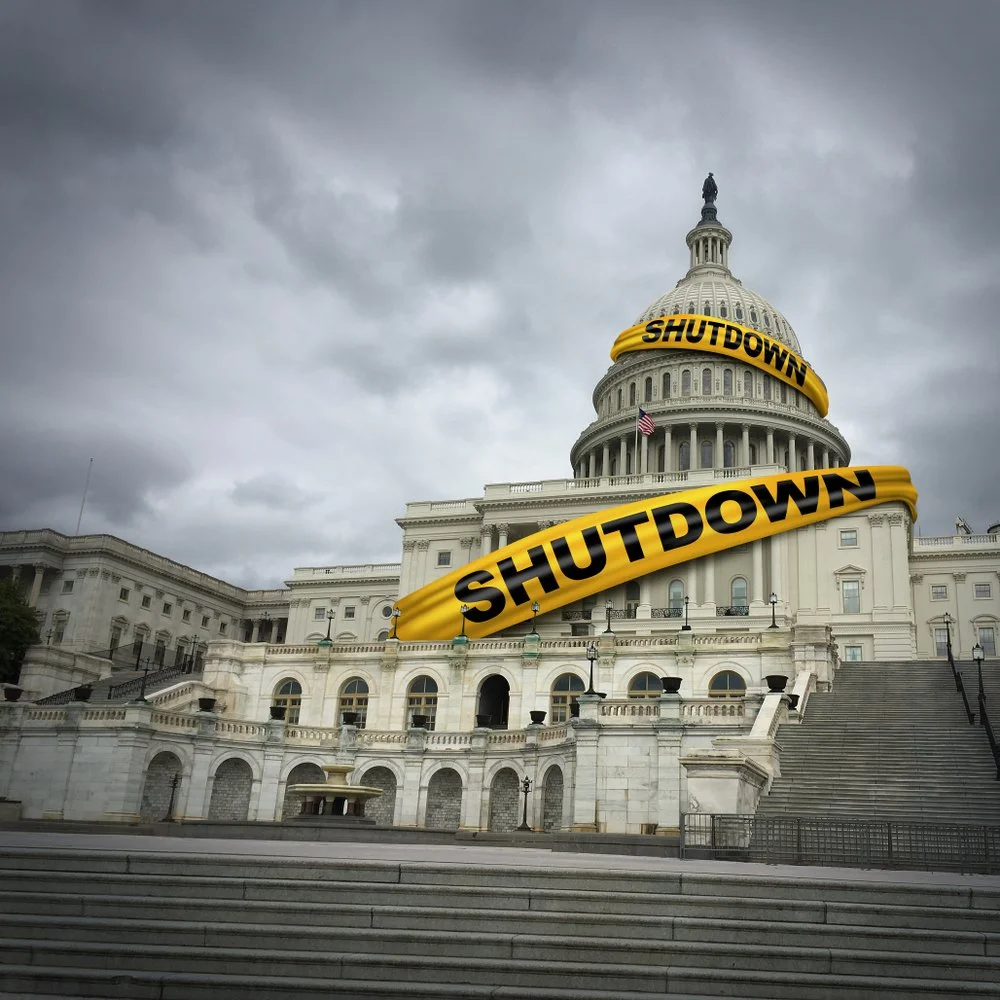
President Trump abruptly canceled a meeting with House Democratic Leader Hakeem Jeffries (D-NY) and Senate Democratic Leader Chuck Schumer (D-NY), with just a week to go before the government shutdown deadline.
"I have decided that no meeting with their Congressional Leaders could possibly be productive," said President Trump.
This as prospects for a deal look dim, as Republicans need some Democratic support in the Senate to get a continuing resolution over the finish line. As of now, the big sticking point is over extending enhanced tax credits to purchase health care coverage under the Affordable Care Act (ACA). Republicans want those out, while Democrats are demanding they stay in. Those tax cuts are scheduled to expire at the end of the year.
The Senate, meanwhile, is on a scheduled weeklong recess and the House is out until after the deadline. Before leaving town, the Senate voted down both a Republican and Democrat-written version of stopgap legislation. Party leaders agreed to a 60-vote threshold for each, and neither version was able to muster enough support.
Senate Majority Leader John Thune (R-SD) did not rule out calling the Senate back early, saying it’s “unlikely” but “never say never.”
Besides the ACA subsidies, Democrats also want Medicaid cuts rolled back and restrictions on the administration’s use of pocket rescissions to claw back money appropriated by Congress.
“If Republicans are willing to simply sit down and talk with Democrats, a concept most Americans understand, we can address these pressing issues affecting American families and responsibly fund the government,” said House Appropriations Committee Ranking Member Rosa DeLauro (D-CT).
Breaking with Tradition
Meanwhile, the House is pushing to break recent tradition by formally conferencing government funding bills for fiscal year (FY) 2026 with the Senate.
The House voted to begin to conference three of the 12 annual funding bills for FY 2026: the Departments of Veterans Affairs, Agriculture, the Food and Drug Administration (FDA), rural development and military construction, and the legislative branch.
“What we’re really advocating for is an actual, old-school conference, the way this is supposed to work, between the House and Senate,” said Speaker Mike Johnson.
So far, Senate Majority Leader John Thune said he supports the idea, but needs Democrats to sign off.
19 House Republicans and 13 Democrats were appointed to the conference committee.
House Appropriations Committee Chairman Tom Cole (R-OK) says a formal process will be more beneficial, rather than having just congressional leadership involved. “I would prefer much more member involvement, and I know the Speaker would,” said Rep. Cole.
Provisions for Federal Employees
And with the continuing resolution (CR) hanging in the balance, federal employee groups are making their voice heard.
In a letter to Congress that has garnered over 3,500 signatures so far, the Civil Servants Coalition that includes members from Federal Workers Against DOGE (FWAD) and the Science and Freedom Alliance (SAFA) is asking that four specific provisions be included in any CR.
The coalition letter, which is open to signatures from current federal employees, former feds, and federal allies alike, asks for an end to the impoundment of Congressionally appropriated funds, a defense of healthcare, science, safety, and public health, protecting the federal workforce from unlawful purges and retaliation, and protecting civil liberties.
“These measures are not partisan asks, they are constitutional imperatives,” stated the letter.
Senator Chris Murphy (D-CT) amplified the letter with a post on Bluesky.
“The federal workers who take care of our veterans, inspect our food, and help people through natural disasters know Trump’s lawlessness is hurting everyday Americans and they are begging Congress to stop it,” Senator Murphy posted.