
President Trump Signs “Big Beautiful Bill” into Law Enacting Much of His Agenda
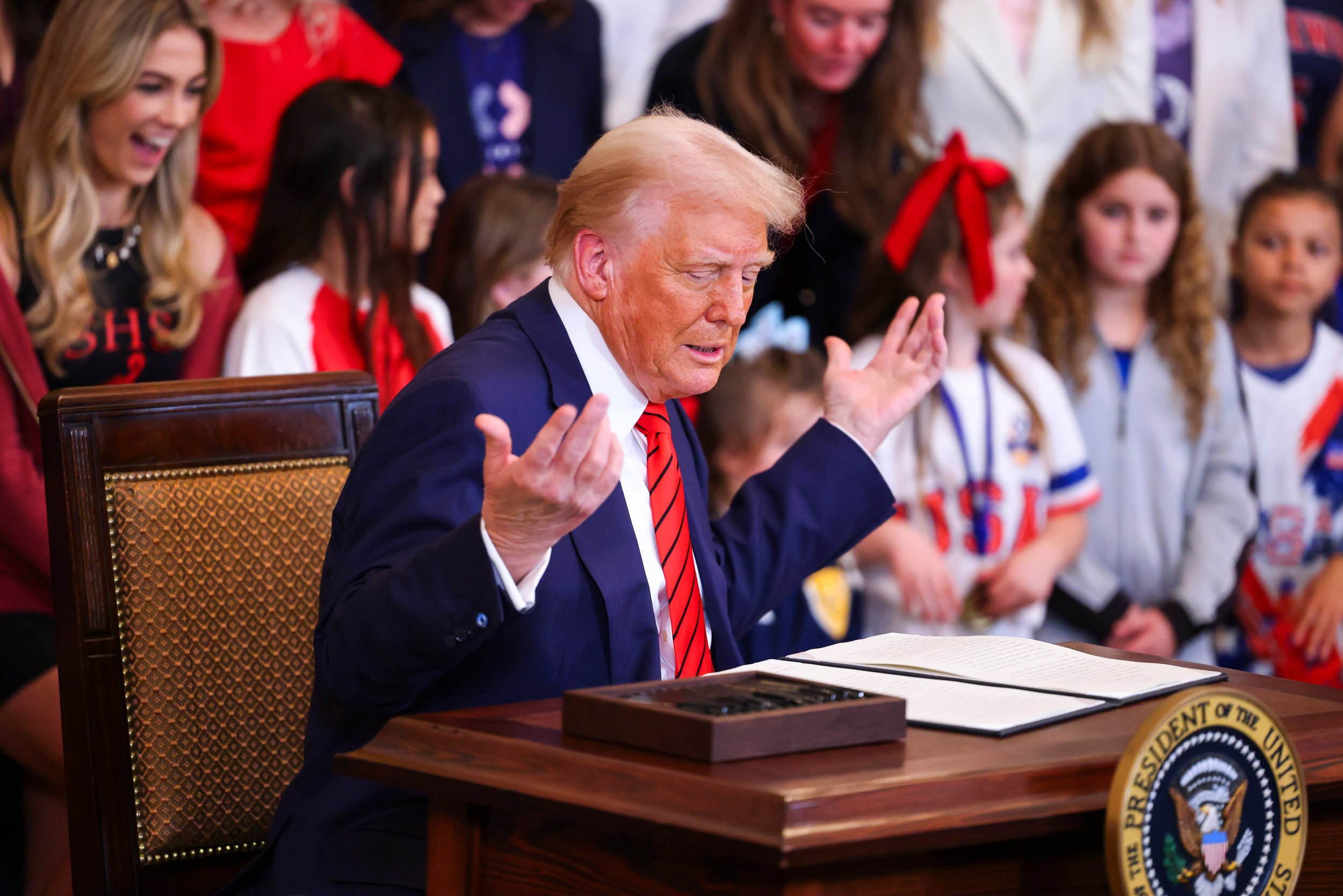
President Trump signed his’” Big Beautiful Bill” into law on the Fourth of July, meeting his self-imposed deadline to get the massive $3.4 trillion package enacting much of his agenda signed into law.
The signing ceremony came after the House passed the bill on a vote of 218-214.
"I can say very proudly that our country is more proud right now than it has been in many, many years," said the President at a military family picnic. "The last two weeks, there's never been anything like it, as far as winning, winning, winning."
Passage of the nearly 1,000 page bill came after House Speaker Mike Johnson (R-LA) worked to convince skeptical Republicans to get on board, including members of the ultra-conservative House Freedom Caucus who were upset that the Senate legislation would explode the deficit.
It also came after House Minority Leader Hakeem Jeffries (D-NY) delivered a record-setting eight-hour and 44 minute speech protesting the legislation.
“Above all else, I’m just thankful for the spirit, the heart and soul of the American people who have risen up throughout this country to make it clear to all of us in this institution: Keep your hands off our Medicaid. Keep your hands off our health care,” said Rep. Jeffries.
The bill makes President Trump’s 2017 tax cuts permanent. It also eliminates federal taxes on overtime, a key issue for the law enforcement community.
To pay for the tax cuts, reductions are being made to spending on Medicaid and the Supplemental Nutrition Assistance Program (SNAP), an issue that prompted outrage from Democrats as well as some conservatives worried about impacts on rural hospitals and economies.
Immigration Enforcement
The legislation also includes provisions to dramatically expand immigration enforcement and the immigration industrial complex.
It includes a more than $150 billion infusion of cash for Immigration and Customs Enforcement (ICE) and Customs and Border Protection (CBP): $45 billion for building new detention facilities, $46 billion for constructing a border wall along the U.S.-Mexico border, and $14 billion for deportation operations. ICE will also receive funding to hire an additional 10,000 agents by 2029.
ICE will be the largest law enforcement agency in the country, with a budget that exceeds many nation’s entire military budget.
The legislation also caps the number of immigration judges at 800 and imposes a $100 fee for those applying for asylum.
Federal Workforce Provisions Stripped
It’s also important to note that nearly all the provisions targeting federal retirement benefits and civil service protections were removed from the final legislation.
That means the mandatory rise in contribution rates in exchange for civil service protections is out as are restrictions on union time and a filing fee to appeal a case to the Merit Systems Protection Board (MSPB). The removal of these comes after the Senate parliamentarian said most of the federal workforce provisions violated the Byrd Rule, which aims to prevent the inclusion of provisions that are “extraneous” to the federal budget.
Earlier versions of the bill eliminated provisions cutting pensions and the FERS annuity supplement.
The only provision that remains is for OPM to conduct a program integrity audit for the Federal Employees Health Benefits Program (FEHBP) to ensure only eligible participants are on plans, as well as $100 million in funding for the Office of Management and Budget (OMB) to find “budget and accounting efficiencies.”