MSPB Finalizes Rule Overhauling Federal Employee Discipline Appeals
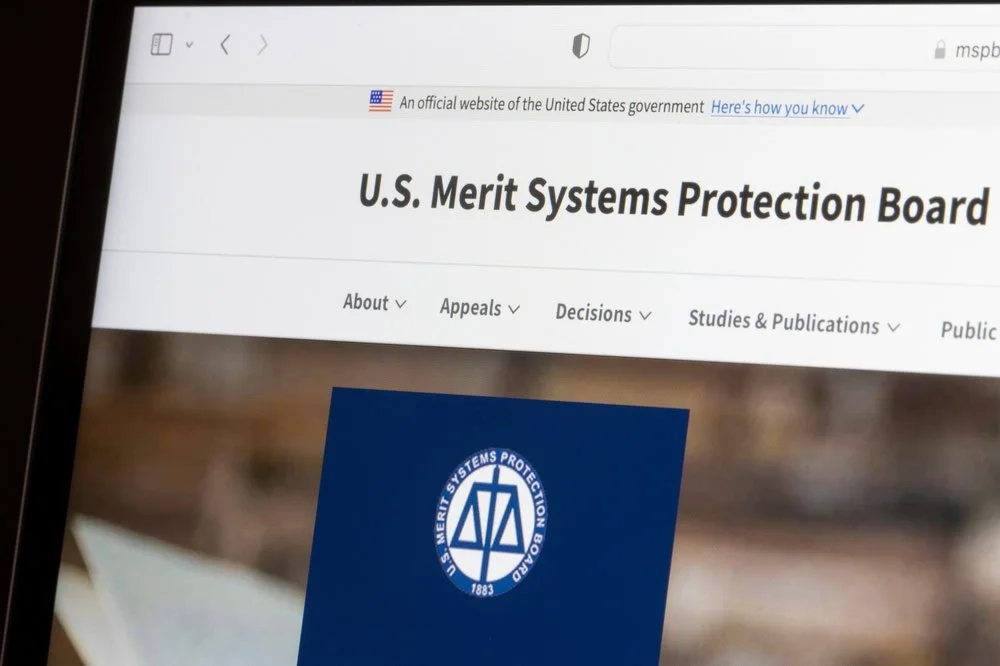
A decades-old framework governing how federal employee misconduct penalties are reviewed is being overhauled, under a new final rule from the Merit Systems Protection Board (MSPB). The change could give federal agencies more flexibility in disciplining employees.
The final rule lifts the requirement that the Douglas Factors be considered in every penalty determination, upending a practice that’s been around since the early 1980s.
Rather than requiring a consideration of all 12 factors– which include an employee's disciplinary record and the seriousness of the offense— MSPB will evaluate penalties on a case-by-case basis and consider the “totality of the circumstances.”
MSPB said the mandatory application of the Douglas factors resulted in a “rigid and mechanistic” process forcing administrative judges and agencies to consider factors unrelated to the specific case.
Although they will no longer be mandatory, the Douglas Factors are still “available to parties and to the Board wherever they are material to the reasonableness of the penalty in the case at hand” with parties remaining “free to raise them.”
“Streamlined Process”
MSPB says the changes will result in a more flexible, streamlined, and cost-efficient appeals process, and noted that its standards remain “reasoned, grounded in record evidence and subject to review by the federal courts.”
The rule also establishes a presumption that an agency's chosen penalty is reasonable when it is at or below the maximum reasonable penalty.
“Analytical Vacuum”
Among the groups writing in opposition was the American Federation of Government Employees (AFGE), which said the rule could lead to vague and arbitrary decisions and create the potential for politicization.
“Adopting such a flimsy approach, without a sound factual footing and after 45 years of heavy reliance interests, will result in an analytical vacuum where agencies and the MSPB will be at sea without the established tools needed to make reasoned and reasonable penalty determinations,” wrote AFGE in its comment.
The final rule takes effect on October 5, 2026. Appeals already pending by October 5 are subject to the existing framework.