Congress Nears Finish Line on FY26 Spending as Senate Faces January Crunch
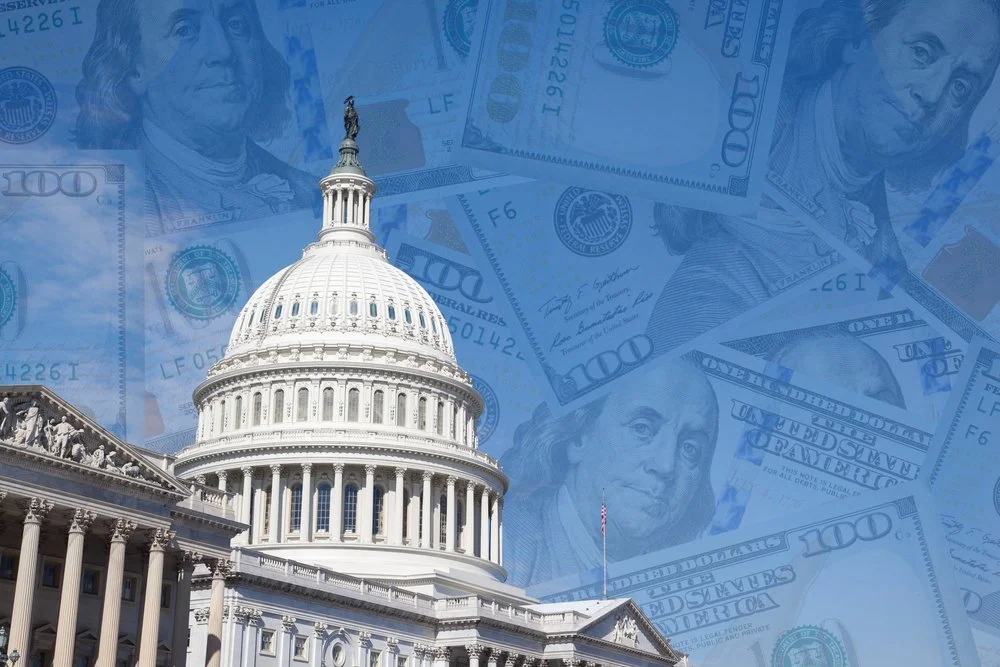
Congress is halfway home in the fiscal year (FY) 2026 appropriations process, passing six of the 12 bills to fund the government and avoid a partial government shutdown before the January 30 deadline.
And there’s plenty of optimism from appropriations leaders that all the bills will pass soon.
“At a time when many believed completing the FY26 process was out of reach, we’ve shown that challenges are opportunities. It’s time to get it across the finish line,” said House Appropriations Committee Chairman Tom Cole (R-OK).
One potential wrinkle: the Senate is out this week, meaning it will have to pass all outstanding bills the last week of January.
Here’s where we stand on funding:
Last week, the Senate passed a $180 billion minibus by an 82-15 vote, funding the Commerce-Justice-Science, Interior-Environment and Energy-Water bills. That legislation already cleared the House and President Trump is expected to sign it.
The House also passed bills funding the State Department, the Treasury, the Office of Personnel Management (OPM), and General Services Administration (GSA), and sent it to the Senate for consideration. That bill was initially intended to include funding for the Department of Homeland Security (DHS) but that was pulled following the Minnesota shooting involving an Immigration and Customs Enforcement (ICE) officer.
Federal Workforce Provisions
In the Treasury/State minibus are several provisions affecting the federal workforce.
Lawmakers requested a federal employee census, asking for data on the number of federal employees before President Trump took office and on September 30, 2025, broken down by agency, occupation, duty station, and compensation. Lawmakers also want precise data on who participated in the deferred resignation program, which allowed employees to be paid leave for several months before leaving government.
In addition, the bill calls for OPM to detail how and when employees are deemed eligible for remote work, how often those agreements are reviewed, and how remote work agreements influence locality pay.
Plus, lawmakers asked the Office of Special Counsel for data on their caseload related to the Hatch Act as well as whistleblower disclosures.
Sprint to the Finish
Text for the remaining four bills was released at the end of the Martin Luther King Jr., holiday weekend by House appropriators, totaling $1.2 trillion in spending.
It includes the Defense, Labor-HHS-Education, Transportation-HUD and Homeland Security spending bills, as well as several add-ons from authorizing committees, including health care “extenders” and trade preference renewals.
The Department of Health and Human Services (HHS) would be funded at nearly $117 billion, a $210 million increase. The Department of Labor (DOL) would get $13.7 billion, a $65 million boost.
Defense spending would be $839 billion, while the Department of Homeland Security (DHS) would get $64 billion.
The final compromise keeps ICE spending at $10 billion for the fiscal year, while reducing the budget for enforcement and removal efforts.
Many Democrats had demanded that additional ICE funding from DHS comes with conditions to crack down on the Trump Administration’s enforcement tactics, but that was not included.
ACA Subsidies Not Included
Also not included was an extension of the Affordable Care Act subsidies, the issue which prompted the record-setting government shutdown last year.
However, there is bipartisan health care legislation that includes a crackdown on drug intermediaries known as pharmacy benefit managers, renewals of several public health programs, and $4.6 billion in fiscal 2026 funding for community health centers.