

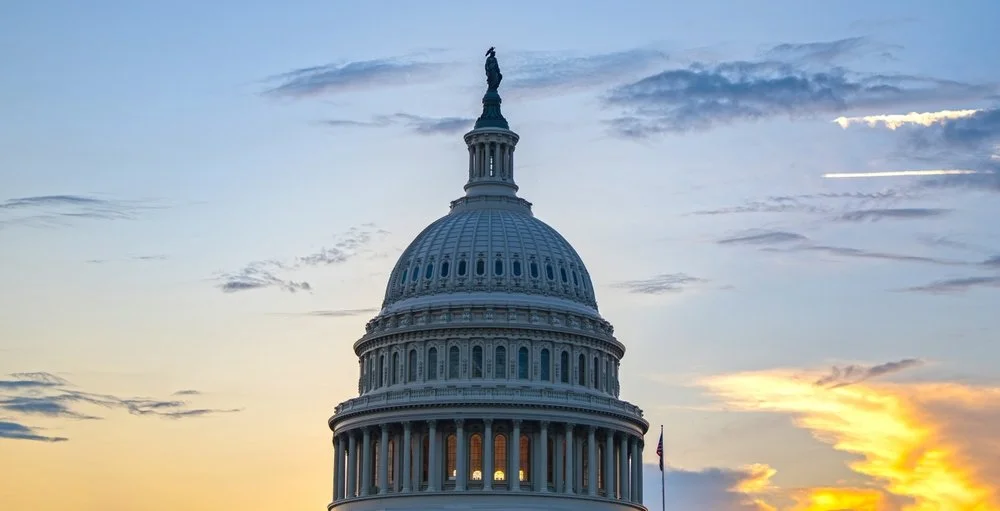
Congress returns to Capitol Hill following the midterms facing a December 11 deadline to fund the government.
That means lawmakers must agree on full-year fiscal year (FY) 2027 appropriations bills or strike a short-term deal to keep the government open and avoid a shutdown.
With Democrats taking control of both houses of Congress in January, political observers note there will likely be little political will to get full-year funding done, meaning a short-term resolution is the likely path forward to avoid another shutdown.
On election night, Senator Patty Murray (D-WA), the likely incoming chair of the Senate Appropriations Committee wrote on X that “This former preschool teacher is going to teach President Trump a simple lesson: The power of the purse belongs to CONGRESS!”
Also complicating matters is that the current Appropriations Committee Chair Sen. Susan Collins (R-ME) lost her reelection bid. Senator Collins has played a central role in bipartisan negotiations over government funding.
And likely incoming House Appropriations Committee Chair Rosa DeLauro signaled that Democrats may use the funding deadline to express disapproval for the war in Iran.
"We are having conversations now on the best path forward and the tools we can use in final funding bills to bring a swift end to this costly, deadly war," said Rep. DeLauro (D-CT).
NDAA and Other Legislation
Beyond government funding, lawmakers face several other significant legislative priorities before the 119th Congress adjourns.
One of the most pressing is the National Defense Authorization Act (NDAA), the annual defense policy bill that sets priorities and authorizes funding for the Department of Defense and other national security programs. The House passed its version of the legislation earlier this year, but the Senate has yet to advance its own version amid disagreements over defense spending and the administration's military policies.
The NDAA is considered must-pass legislation, making it a major priority for lawmakers seeking to complete their work before the end of the year.
Adding to the uncertainty surrounding defense issues is the House's consideration of articles of impeachment against Secretary of War Pete Hegseth.
Other items on the legislative agenda include a potential permitting reform package, the Farm Bill, and efforts to address the nation's debt limit.
In addition, lawmakers on both sides of the aisle will be holding leadership contests and will be selecting committee leaders for the upcoming Congress.
For their part, some Republicans are urging their leaders to try and push priorities through before Congress changes hands.
“I don’t think my Democratic colleagues are going to give any more money to defense unless we agree to give the same or larger amount to domestic spending,” said Senator John Kennedy (R-LA). “So if we’re going to get money to defense, we need to do it now.”
