
Congress Advances Federal Union Bill; ACA Talks Heat Up as Legislative Year Nears Finish
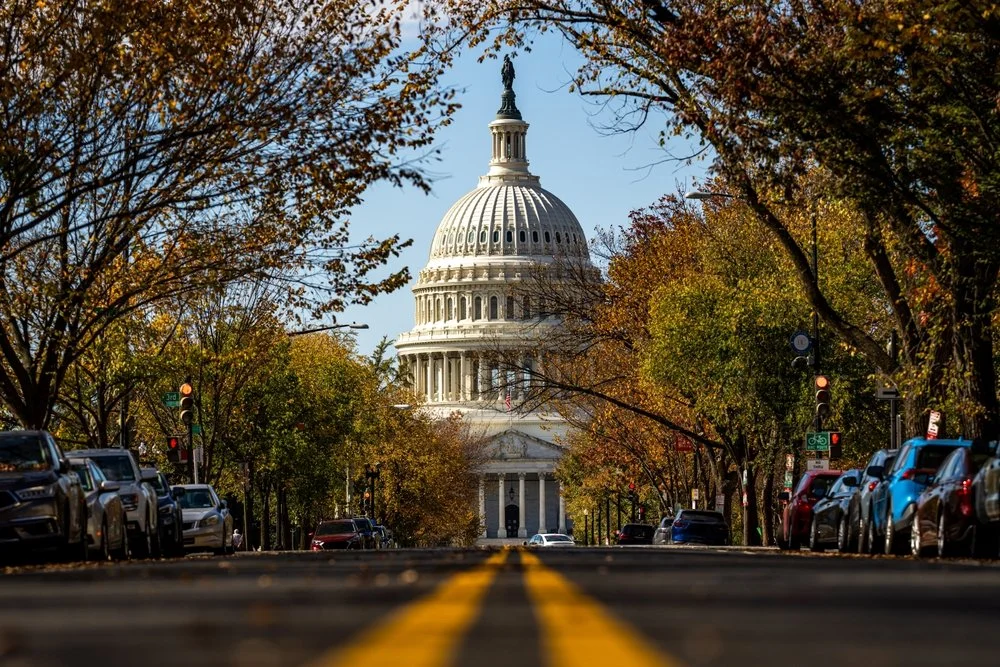
Just two legislative days left on the Congressional calendar for the rest of the year, but Congress is still active on legislation impacting the federal workforce.
That includes passing the Protect America’s Workforce Act (H.R. 2550), which would restore collective bargaining rights for most federal employees. The bill passed 231-195, with 20 Republicans joining all House Democrats in supporting the bill.
A successful discharge petition enabled the floor vote, despite opposition from House Speaker Mike Johnson (R-LA).
The legislation would restore collective bargaining rights for thousands of federal employees after President Trump tried to nullify them in a pair of executive orders, citing national security concerns.
The legislation is likely to face an uphill battle in the Senate.
AI Hiring Bill
On the hiring front, a new bipartisan bill aims to improve the federal hiring process for artificial intelligence (AI) and other specialized technology positions.
The AI Talent Act was introduced in both Houses of Congress.
The legislation would establish agency tech and AI talent teams to “improve recruiting, assessments, job announcements, and candidate evaluation.”
It also authorizes the Office of Personnel Management (OPM) to create a central AI and tech talent team to lead pooled hiring, provide training and support to agency hiring teams, and develop shared resources. Agencies will also be allowed to share qualified candidate pools.
“The United States can’t fully deliver on its national security mission, lead in responsible AI, and compete in the AI race if our federal agencies don’t have the talent to meet this moment,” said Rep. Sara Jacobs (D-CA), one of the sponsors. “Right now, the government is competing with the private sector, which can hire faster and pay more, leaving critical roles unfilled and U.S. potential untapped.”
ACA Subsidies Update
And in the background is the looming fight over funding the government for the rest of the fiscal year (FY) 2026 and whether to extend Affordable Care Act (ACA) subsidies, which expire January 1, 2026.
A bipartisan group of senators met on Monday night to try and hammer out a last-minute compromise that would include a two-year extension of the subsidies with a new income cap and additional fraud protection language.
And while a framework could be announced this week, it would not come up for a vote until January, past the initial expiration of the subsidies.
“The calendar precludes getting something done this week,” said Senator Bill Cassidy (R-LA). “But still, a commitment to work together is a lot of progress.”
All this adds up to a busy start to the new year for Congress, as it deals with both the subsidies and the January 30 deadline to fund the government or face another partial government shutdown.